Friday, January 31, 2014

White Privilege in a RAV4


Since the beginning of the semester, I have not had a sticker on my car that says I am a Rhodes student and can park on campus. However, every time I drive past campus safety in my silver RAV4, I am not stopped; they barely glance my way before giving me a friendly smile and wave that is taken as permission to enter. Every time this happens, I always remark to whomever is in the car with me that it is because of the color of my skin that I am not stopped. I have had friends counter by saying that it is more because I look young and college-aged or because it is cold outside and the officer does not want to step out of their warm gatehouse or even because the officer is lazy, which is often a racially fueled comment in itself.  

I think that to most of my peers reading this post, this will be an obvious form of white privilege and I do not disagree. If I were black, even if I still looked young, there is a significantly higher probability that the officer would have stopped me, regardless of the outside temperature or how motivated they were feeling. As we discussed in class, the real question is to ask myself if I am willing to give up that privilege.

In theory, yes, of course I am willing to take the 5 extra seconds to stop and roll down my window and explain that I got a new car over break, but in practice, I might be late for class or convince myself that the officer simply recognizes me from around campus (and the latter could potentially, though not likely, be true). Simply put, even the smaller privileges can be hard to give up and it also gets complicated when you think that just because you give up this one thing, does not mean that it gets better for someone else.
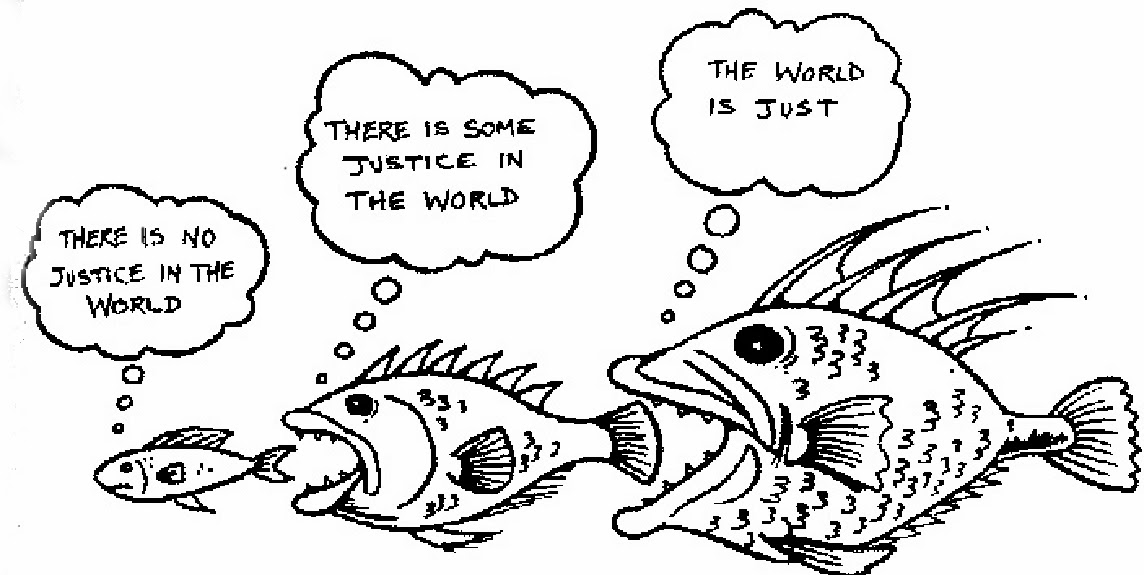

However, I think the bigger problem that our society faces is getting others to realize that both white and male privilege are very real. As this cartoon from The New Yorker shows, those who experience the privilege are often in denial. They benefit from the system and cannot see the larger picture of how this hierarchy came to be nor how our privilege only exists at the expense of others (see first cartoon). Although I do think we should continue to give up our privileges, I think it should be to educate those around us on how they have become numb to the ways in which people of color are treated in our world. And even though I will not be able to use the car example to expose inequality anymore (I just got a sticker from Rhodes Express), I have made a promise to myself to recognize and challenge privilege whenever I notice it. 

Twitter Privilege

Our discussion about privilege, both as they relate to the ideas of Lorde and McIntosh, discuss privilege as a primary factor in effective feminist organizing.

This week, progressive online and print publication The Nation, published a four page long piece (that also served as the cover story of their magazine) that parrots the classic White Feminist rebuttal to the criticism that they face from people of color during dialogue on Twitter. In short, they claim that by criticizing the ignorance and lack of inclusivity often perpetuated by white feminists, marginalized feminists on Twitter, they are creating a “toxic” environment that is unconducive to the feminist movement as a whole.

The ongoing criticism of white, privileged feminists by otherwise marginalized voices on Twitter is not “toxic;” It’s necessary.

Twitter is a vital platform for marginalized voices that don’t have access to a more “legitimate” or high profile publishing platform. During introductions at the beginning of the semester, I would get an unwanted laugh from the class when I mentioned that I was a regular consumer of feminist dialogue on Twitter. I found this extremely frustrating because in a liberal arts environment overpopulated by white privilege, the idea that I could find any valuable academic information on Twitter, as opposed to in a book or journal article, was apparently laughable.

At least in terms of Twitter, this is perhaps the largest way that I have experienced privilege silencing not only the legitimacy of these voices in themselves, but also their ability to shared with others through an intermediary. By not acknowledging the inherent privilege that many white feminist writers have in their ability to obtain a publishing platform that is viewed as “legitimate” by most media consumers, we cannot even begin to explain to those same consumers why Twitter is so crucial for marginalized voices.

Because women of color, trans, and queer people don’t have the same opportunities to gain “legitimate”  visibility in the media, they take to Twitter. This allows for them to steer their own dialogue while interacting with others. Additionally, it allows them to interact more effectively with other people whose issues and experiences align with theirs, making any subsequent thought more informed.

Thinking that this makes the information, which is typically included with resources and references, as less important or valid, is toxic to the maintenance and growth of the online feminist movement.

Calling out privilege for the sake of intersectionality, however, really isn’t.

I have included links to some of my favorite feminist writers on Twitter, who you should all definitely check out. They speak on a variety of different issues but all have extremely interesting things to say about privilege.


#FollowFriday
2. Suey Park, @suey_park, #NotYourAsianSidekick
3. Mikki Kendall, @Karnythia #SolidarityIsForWhiteWomen
4. Sarah Kendzior, @sarahkendzior
5. Ayesha A. Siddiqi, ‏@pushinghoops

Sex v. Gender and Men Trying to Guess Bra Prices


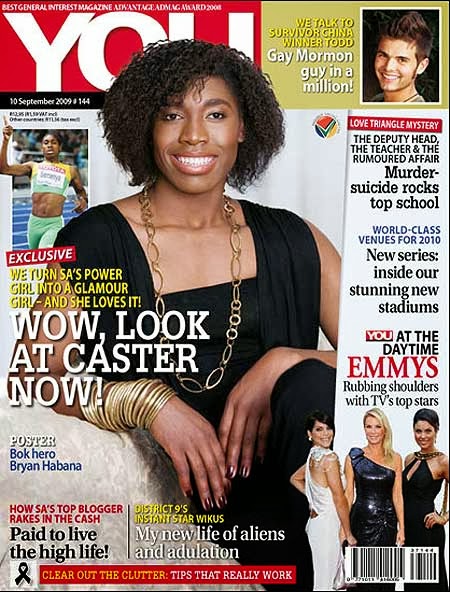
After reading Simone de Beauvoir’s piece, I realized that I had not formulated an opinion myself about what exactly constituted a ‘woman.’ Was it appearance, biological difference, how one simply identified themselves and acted, or was it something more? I was interested to know what others thought a woman was. My thoughts went to the South African runner, Caster Semenya, who was forced to undergo a “gender verification” test after competing and placing in the women’s 800-meter Olympic run in 2009. She was forced into this test simply because of the way she looked. Her body type did not fit that of a “typical” woman, even an athletic woman, and many of her competitors were upset that such a seemingly manly woman should be able to compete in the same category as them. Her test results showed that she had three times the normal level of testosterone than the average woman (accredited to her internal testes), and was also missing both a womb and ovaries. What was most notable about Semenya’s situation however, was what happened after the race. She was asked to give an interview and be on the cover of You magazine, a South African publication. As you can see, she is wearing a flattering black dress and a ton of jewelry. Her hair, now taken out of braids, is done beautifully and compliments the eye makeup, lipstick, and nail polish someone has put on her. (As a side note, when you search her name, the first thing Google suggests is “Caster Semenya makeover.”) When this was printed, it was make clear that there was to be no hint of masculinity in her cover photo, which made her both more relatable and easier for people to accept. When she was seen as a hermaphrodite, she made others question what exactly it meant to be a woman, by default forcing men to question what it was to be a man. If this woman was stronger, faster, and had more masculine features than many men in America, yet she still identified as a woman, how did that modify the definition of a ‘woman’? Simply by being herself, she threw off the entire balance of feminine v masculine and female v male. This proved to be unacceptable and controversial though, and she was quickly corrected and made a definitive woman.

Knowing this and everything else we’ve talked about in class, I’m still struggling to determine what makes a woman a woman. In recent history, it has been exciting and popular to talk about LGBT people and the rights they are being granted or denied, just as it was popular to talk about black people and the rights they were granted or denied 60 years ago. Great change came about for African Americans then, and maybe big changes will come about for the LGBT community in the next decade. Will gender be seen as more fluid? Will those who do not conform be able to live the lives they want without fear of violence or ostracism? Are there other elements that are preventing a gender/sex uprising that were not present during the Civil rights movement of the 1960s?


To end on a happier and unrelated note, I thought this was hilarious and showed just how out of touch men are. These kinds of products are nowhere near the realm of men's thoughts, but I'm pretty sure most women would be able to put prices on men’s products without issue. Click HERE

Once upon a time...

We were talking on Thursday about the ways by which biological boys and girls grow up to be feminine or masculine. Jett-Simpson & Masland (1993) showed that gender bias exists in the content, language, and illustrations of a majority of children’s books. Through this popular media, girls are already learning to be marginalized from a young age. What’s a girl to do then? I guess there are other forms of media that children subscribe to… let’s go with movies. What does she learn there? Well, Cinderella teaches her that beauty is what really matters and gets you ahead in life, Jasmine that you should run away from home when you disagree with your parents, Belle to remain in an abusive relationship, and Ariel to change your body for a man. Of course, these are somewhat of a dramatization, but these negative lessons are still implanted to various degrees in the young girls of our world under the pretense of children’s movies.

Chris Cragin-Day has a slightly more positive (and unexpected) thing to say about the plight of Disney princesses in a recent blog post. She argues that the knight in shining armor, the prince charming – he is a metaphor for God, a divine prince of sorts. This prince is someone who loves your (the princess’) inner beauty and, if you persist in goodness, someday you and your prince will live happily ever after. Take that as you will…

Little boys are not immune to these stories either; Disney imparts their own lessons for them. When girls are told these things from a young age, that the only thing that matters is their beauty or that they must rely on men, boys get the same message. Plus, they get one of their own. As Sanjay Newton relates in this short videoyoung boys are fed sexist views that negatively affect them too. Newton mentions the perpetuation of the sexual objectification of women, the need for chiseled bodies and physical prowess, and the emphasis of violence and dominance.

Disney has also received many blows about its rampant racist tendencies, to which it responds with movies like Pocahontas, Mulan, and The Princess and the Frog. Still, stereotypical racist messages abound (video).

I will be seeing Frozen for the second time in theaters tonight. And I am not ashamed to tell you this. My two favorite movies (probably ever) are Tangled and now Frozen. Why do I like this movie so much? One, because it is a great sister movie: having a younger biological sister and 177 sorority sisters, I really like the message. Two, it is different from the other Disney films. Tangled,
Allendra Letsome, NOW Vice President of Membership says, was Disney “taking baby steps on the path to feminism.” Now, with Frozen we take a few more baby steps toward feminism. Exalted as a progressive film by Gina Luttrell of PolicyMic, Frozen also tackles social issues of sexual orientation along with sexism. I don’t want to give too much away, but if you’ve already seen it (or don’t plan to) here’s the article (SPOLIER ALERT). At the very least, it passes the Bechdel test.
Clearly, Disney has some work to do, but maybe things are getting better. 

Speaking of Queen B

In case you couldn't get enough of Beyoncé, here is an article from the Huffington Post that's been getting a lot of traffic.

Do y'all think she "lost the feminist game in one fell swoop" with Jay-Z's lyric to domestic violence in "Drunk in Love"? Definitely an interesting conversation to have.

Thursday, January 30, 2014

Beyoncé 101

So… I stumbled upon this today. Dr. J - your dream is coming true for this guy. And at Rutgers, no less. But really; what he says at the end of the article, "It's important to shift students away from simply being consumers of media toward thinking more critically about what they're engaging on a regular basis." is dead on!! Too bad you didn't have more time here. With classes about Elvis (which I really want to take!), Beyonce doesn't seem so radical. 
~Brooke

Seperate being-ness

I have taken various classes at Rhodes - each hitting upon ideas of difference. Within these classes I've consistently been taught similar lessons. Race, I am told, is a social construct. So is the concept of gender. These statements have been emphasized with text from current as well as past authors. Simone de Beauvoir, as a leading writer within gender and sexuality authorship, stands out among the rest. Though I had previously recognized the difference between sex and gender - it was her words which outlined for be the defense for this statement. If ever approached by someone who was unable to grasp the concept of sex and gender being two distinct and separate forms of being-ness, I would likely point them to her. 

In her text, Simone de Beauvoir distinguishes between the concept of sex and gender. She suggests that gender is an aspect of identity which is gradually acquired over time. This distinction is essential to the effort in debunking the claim that sex is invariant. By differentiating between the terms sex and gender, de Beauvoir expressed her belief that gender is the cultural meaning that the body acquires over time. With this – it becomes incredibly difficult to attribute the social values of woman to the biological compulsion of female. Neither can we easily refer to gendered behavior as natural/unnatural. By definition – all forms of gender is socially constructed. All gender is therefore unnatural.

If this idea (that gender is the accumulation of cultural meaning over time and therefore is essentially unnatural) is preserved, then it follows that being a given sex has no necessary consequence to gender. The presumption of a cause-based relationship between sex and gender is then undermined. Following this, the identification of the female body as the center of the gender “woman” is recognized as arbitrary.

I believe that this line of thought is what leads to a distinct contribution of Simone de Beauvoir: that being female – and being woman – are two separate forms of existence.